
Air Sealing
Air Sealing in Granada Hills
Insulation slows heat down. Air sealing stops the leaks — closing the hidden gaps where air moves between your attic and living space.
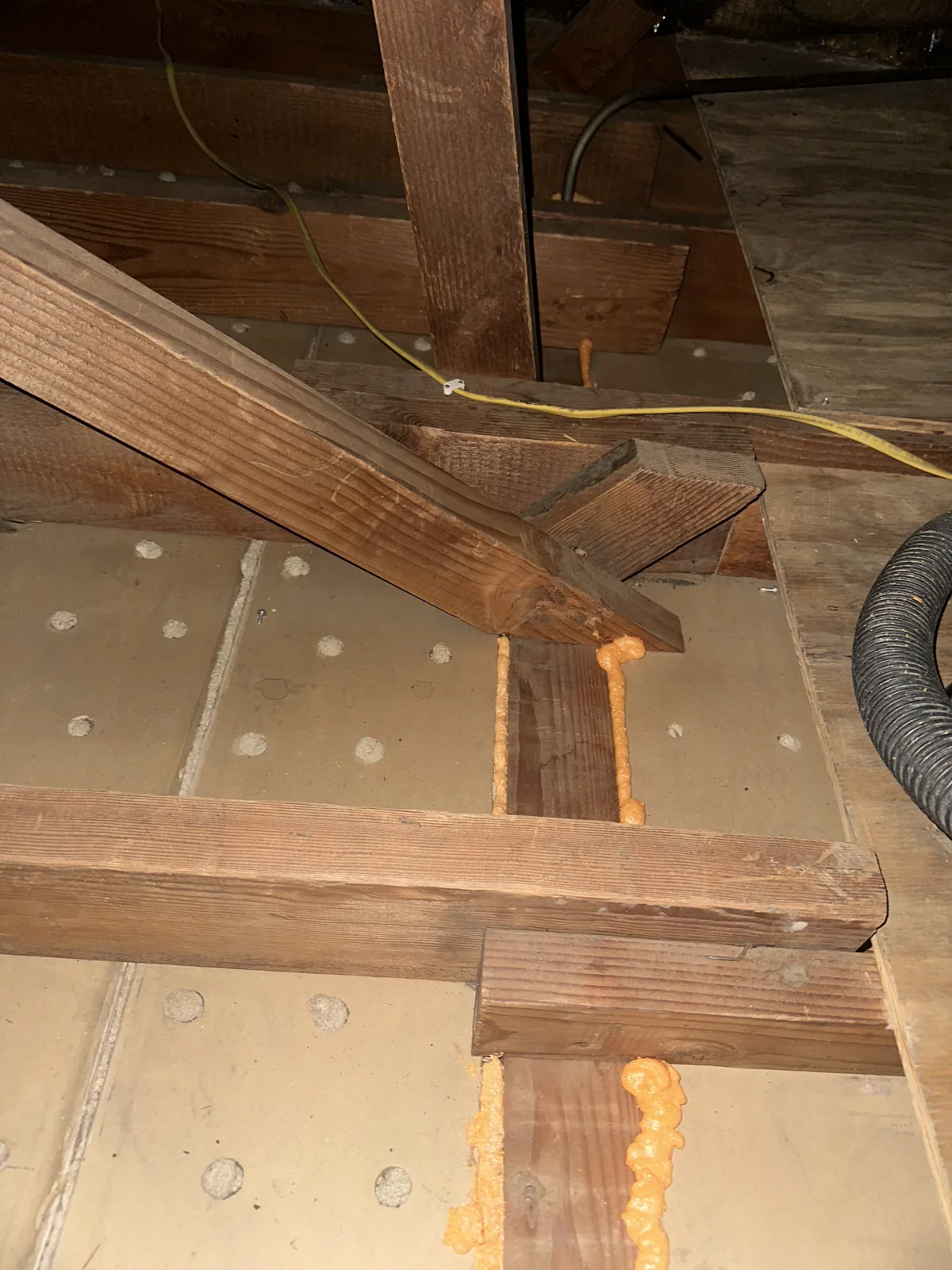
Fireblock Foam & SealantsSealed Before Re-InsulatingPhoto-Documented Work
15+Years Experience
Why Air Sealing Matters in Granada Hills
Most older Southern California homes are not properly air sealed. Sealing the hidden gaps where air leaks through your home helps your insulation perform, lowers bills, improves comfort, and reduces dust.
In many older homes there are small openings all over the attic floor and ceiling area — around electrical wires, plumbing pipes, air-conditioning vents, bathroom fans, recessed lights, the tops of interior walls, and gaps where framing meets drywall. Individually each opening seems small, but added together they create a lot of air leakage.
The Temperature Difference
In Southern California, attic temperatures can easily reach 150 degrees or more on a warm day, while the inside of the house may be cooled to 70 to 75 degrees — roughly a 75 to 80 degree difference. Because of that big gap, air naturally gets pushed and pulled through the small holes in the home. Hot attic air, dust, and insulation particles move toward the living space, and the cold air you paid for leaks back into the attic.
A Simple Way to Think About It
Air sealing is like closing the windows before running the air conditioner. If you ran your AC with a window cracked open, the house would still cool down somewhat, but the system would have to work much harder. Hidden air leaks work the same way — you may not see them, but they still make the home harder to cool and heat.
 Fireblock foam
& sealants
The Payoff
What Air Sealing Does for Your Home
Insulation That Performs
Insulation slows heat transfer but does not stop air leaks by itself. Sealing the gaps lets your insulation work the way it is supposed to.
Lower Utility Bills
When conditioned air stops escaping through attic penetrations, your HVAC system runs less and you waste less of the energy you paid for.
More Even Comfort
Stopping hot attic air and crawlspace air from being pulled into the living space helps homes that are hard to cool in the summer.
Cleaner Indoor Air
Sealing the openings keeps dust, insulation particles, and dirty attic air out of the rooms you live in.
Easier on Your HVAC
Less conditioned air gets pulled back toward the attic, so the system does not have to run longer than it should.
Photo-Documented
We provide photos of the areas we seal and explain the work — important because most sealed areas get buried under new insulation afterward.
Our Process
Our Air Sealing Process
We treat air sealing as part of the insulation system, not as an afterthought.
1
Inspect & Identify Leaks
Before installing new insulation, we find the accessible leakage points across the attic floor — around wires, pipes, ducts, fans, and recessed lights.
2
Seal the Penetrations
We seal electrical holes, plumbing holes, AC vent openings, bathroom fan openings, recessed light areas, the tops of walls, and other visible gaps.
3
Use the Right Materials
We use fireblock foam, proper sealants, high-temperature materials where needed, and other blocking methods depending on the situation.
4
Document, Then Insulate
We photograph the sealed areas and explain the work in writing, then install the new insulation over a properly sealed attic.
Ready for a more comfortable, efficient home?
Reviews
What Granada Hills Homeowners Say
★★★★★
"Luke told me that I would notice a decline in my electricity charges and that the house will stay cooler in the summer and warmer in the winter. The effect has been phenomenal. My AC used to kick in at 1:00 PM in the hot summer days and now it only come on at 4:00PM and stays on for seven minutes and turns off!"
M
Milton MoradGoogle Review
★★★★★
"HUNTER'S INSULATION crew did an outstanding job of preparing our home so that no dust or debris entered our home. The new insulation and thorough duct cleaning has noticeably improved our comfort and temperature control. We highly recommend this company and thank Luke for his expertise."
K
Karen LynnGoogle Review
★★★★★
"Luke was easy to work with and educated me as insulation was not something I had any knowledge of. In the end, I got exactly what I needed at a very fair price. Luke and his crew were very professional and did great work at my home."
B
Bridget HollandGoogle Review
Air Sealing — Real Job-Site Photos
Real job-site photos from our crews across the Granada Hills area.


FAQ
Air Sealing FAQs
What is air sealing?
Air sealing means sealing the small holes, cracks, and gaps where air can leak through the house — usually around electrical wires, plumbing pipes, AC vents, bathroom fans, recessed lights, and the tops of interior walls. Closing those openings keeps hot attic air and dirty air out of the living space.
Why isn't insulation alone enough?
Insulation slows down heat transfer, but it does not stop air leaks by itself. When air moves through gaps in the attic floor or wall framing, it bypasses the insulation and reduces its performance. That is why air sealing is one of the most important steps in a proper attic insulation retrofit.
What materials do you use to seal?
We use fireblock foam, proper sealants, high-temperature materials where needed, and other blocking methods depending on the situation. We commonly seal around electrical and plumbing holes, AC vent openings, bathroom fans, recessed lights, the tops of walls, and other visible gaps in the attic floor.
Which homes benefit most from air sealing?
Air sealing is especially important for older homes, homes getting new attic insulation, homes with high energy bills, homes that are hard to cool in the summer, homes with dusty indoor air, homes with crawlspaces, and homes with lots of ceiling lights, vents, wires, pipes, or ductwork.
Will I be able to see the work after it's done?
Most air sealing work gets buried under insulation afterward — once the new insulation is installed, you usually cannot see the sealed areas anymore. That is why we provide photos of the areas we seal and explain the work verbally and in writing, so you understand what was done and why.
How does air sealing affect my HVAC system?
If there are leaks around ceiling vents, duct openings, or recessed lights, some of the conditioned air your system produces can get pulled back toward the attic. Sealing those leaks means less of the air you paid to cool escapes, making the home more comfortable and keeping the HVAC system from running longer than it should.
Get Your Free Estimate
Every home is different. Schedule a free, no-pressure evaluation and we will recommend what makes the most sense for your house, goals, and budget.
Get Your Free Estimateor call (818) 979-5857