
Service Area
Simi Valley Insulation Contractor
Attic depth, air sealing and ventilation for Simi Valley tract homes
Hunter's Insulation is a licensed, owner-operated insulation contractor (CSLB #1059930) serving Simi Valley and eastern Ventura County. Most of the housing stock here is detached tract houses with an attic of their own above the ceiling. On that stock the work that changes how a house feels is depth, air sealing and a ventilation path that suits the roof.
Get Your Free Estimate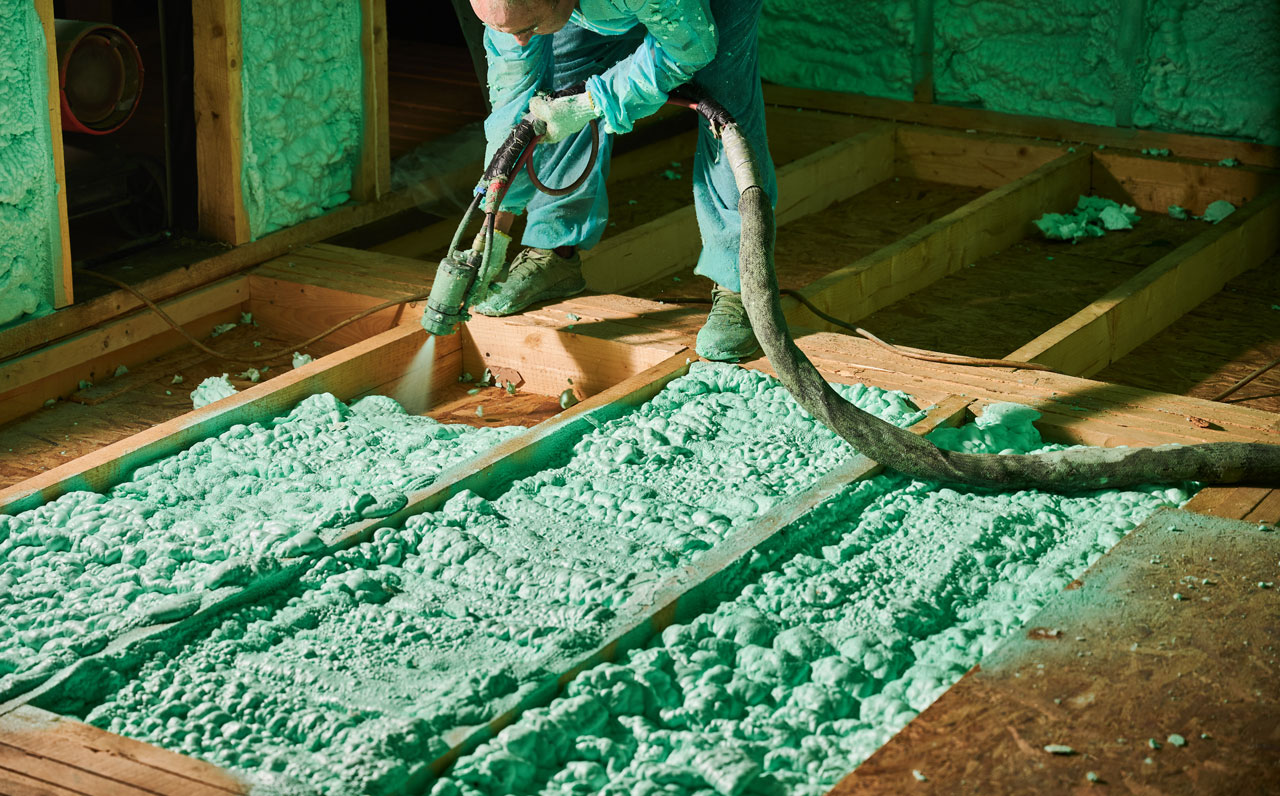
What Simi Valley Tract Homes Need From an Insulation Contractor
More of this city went up in the 1960s than in any other decade, the tracts ran on through the 1980s, and very little here is older. That changes what we plan for, because the wiring and framing surprises of genuinely old housing stock are rare in Simi Valley. A tract attic of that era was insulated once to the standard of its decade and left alone since.
What we find in it now is material settled below the depth it was rated for, and coverage pushed aside by later trades running ducts, wiring and cans. The heat that builds on the roof through the afternoon is still up there in the evening. That is a depth and sealing problem rather than a demolition problem, and it is the usual reason a house of this vintage cannot hold a temperature.
Why Attic Insulation Leads on Seven in Ten Simi Valley Homes
Roughly seven in ten homes in Simi Valley are detached houses, which is why removal, blown-in depth, air sealing and a radiant barrier are all on the table at most addresses here. The attic above your ceiling is yours alone, and so is the roof deck over it, so none of that has to be negotiated around a shared structure.
Simi Valley homes have been re-roofed, remodeled, and added onto for decades, and the attic is where that history shows up. We routinely open hatches to find insulation that has been shoved aside, compressed, or never replaced after a previous trade ran new wiring, ducts, or recessed cans, leaving uneven coverage and rooms that heat unpredictably.
On a tract attic of this era, these are the findings worth opening the hatch for:
- Builder-grade insulation blown to the standard of its decade and settled well below that depth since
- Coverage shoved aside where later trades ran ducts, wiring and cans through the joist bays
- An air handler and duct runs sitting above the insulation instead of below it, in the hottest air in the house
- Can lights and top plates a tract builder left open, so the ceiling plane leaks cooled air straight up
- Empty wall cavities in the pre-1980 tracts, which is about half the houses in this city
Air Sealing and Blown-In Attic Insulation Do the Most Here
Before we blow anything in, we air seal the ceiling plane, top plates and penetrations, because a tract attic leaks in the same predictable places. New material laid over open holes only filters the air on its way out. Where the old layer is contaminated or badly disturbed, we remove and clean it out first.
From there we blow in cellulose or fiberglass to depth, top off where the layer only needs bringing up, and use drill-and-fill or net-and-blow for the empty walls in the pre-1980 tracts. A radiant barrier under the roof deck cuts the load on upstairs rooms, and duct replacement does more than insulation alone where the ducts are the real culprit. Ventilation only helps if intake and exhaust are balanced, so we count the free area the attic already has before adding to the roof. For new builds and ADUs we handle QII inspections so the work passes the first time.
Santa Susana Knolls and Wood Ranch Need a Different Insulation Scope
Two pockets do not follow the rule, and both sit at the edges of town. Out at Santa Susana Knolls there is a pocket where better than a third of the houses were built before 1950, small early houses on narrow hillside lots. Where the house is one of those, expect a low, irregular attic and framing off any tract module. Getting an even depth takes hand placement and staging rather than a hose run from the hatch, and we say so before we book it rather than after.
Wood Ranch is the opposite case. The specific plan behind it was filed in 1988, and the homes built under it came with an insulated attic from day one. The usual scope up there is a top-off to even depth, air sealing at the can lights and top plates, and a radiant barrier for the upstairs rooms. Not every street carrying the Wood Ranch name is that vintage, so we look at the attic before we scope it. It is housing stock we know how to read, and we would rather tell you the attic is close to fine than sell you a removal you do not need.
Attic Ventilation in Simi Valley Starts at the Parcel
Simi Valley sits inside the Ventura County Fire Protection District, where the most restrictive fire hazard classification on a parcel governs that whole parcel. On the slope lots a house clipped at one corner is read at the highest classification throughout. We check the parcel before we spec attic vents, and write the ventilation for the whole house rather than for one end of the lot. Where the parcel comes back unclassified, and much of the valley floor does, the vent plan is decided on airflow alone.
That line runs through this city rather than around it. The Wood Ranch slopes and the hills east of Santa Susana sit on the restrictive side, while downtown, the Town Center and Santa Susana Knolls itself come back unclassified. Two houses a few streets apart do not always take the same vent spec.
We care about doing the install right: proper depth and even coverage, clean air sealing, and balanced ventilation. Luke is on the jobs we take rather than only on the sales call. If your Simi Valley home has hot upstairs bedrooms, an AC that never catches up, or an attic you have not looked at since you bought the place, we are glad to take a look and lay out your options. Call us at (818) 979-5857 to set up a visit.
Ready for a more comfortable, efficient home?
A Look at Our Work
Real job-site photos from across the homes we insulate in greater LA.


Frequently Asked Questions
My house is a Simi Valley tract home from the 1960s. Does that make the attic easier to work in?
Usually yes, because a builder-era tract attic sits on a predictable joist module, so a clean-out, an air seal and a full blown-in layer go down evenly without fighting the framing. What slows the job down is settled depth and coverage pushed aside by later duct, wiring and can-light work. We measure the depth in place before recommending a top-off or a full replacement.
Do we have to move out of the house while the old attic insulation comes out?
Not usually, because the work stays in the attic. Removal runs out through the hatch under containment, so what we ask for is a clear path to the hatch and the rooms under it kept clear while the vacuum is running. The day count and the room plan come after the attic walk rather than before it.
We are in Wood Ranch. Does the existing insulation have to come out before you add to it?
Seldom, on a house built under the 1988 specific plan, because the original layer is usually intact and dry and a fresh blow can go straight over it. What changes that answer is rodent contamination, water staining from a roof leak, or a layer walked flat around the air handler. Those are the three we look for first.
Our place is up in Santa Susana Knolls and the attic is barely crawlable. Can you still insulate it?
Yes, and access is what we settle first. We look at the hatch opening, where a ladder can stand, and how far the hose must run before the material stops flowing evenly. On a cut-up hillside attic that decides the crew and the schedule more than the square footage does. Where the hose will not reach we place material by hand.
Get Your Free Estimate
Every home is different. Schedule a free, no-pressure evaluation and we will recommend what makes the most sense for your house, goals, and budget.
Get Your Free Estimateor call (818) 979-5857