
Fiberglass Batt Insulation
Fiberglass Batt Insulation in Granada Hills
The most common attic insulation material — carefully split and fit around wires, ducts, and framing instead of stuffed into place.
Properly Split & FitOwner-Supervised CrewsHonest System Advice
15+Years Experience
Why Fiberglass Batt Insulation Matters in Granada Hills
Fiberglass batts can perform well when installed properly, but real attics are full of obstacles that make that hard. We split and fit insulation carefully around wires, ducts, and framing instead of stuffing it into place.
Fiberglass batt insulation is by far the most commonly used attic insulation material, especially in new construction. One of the main reasons is that batts can be installed without specialized equipment — during construction it's often faster and less expensive to install them from below while the house is being framed. The insulation comes in pre-cut pieces designed to fit between the most common framing widths used in residential construction, which is why batts have remained one of the most widely used systems for decades.
Why Real Attics Are Hard to Insulate
Most attics are not clean, perfectly uniform spaces. Over the years, homes are modified, rewired, remodeled, added onto, or have HVAC systems replaced. Attics end up with electrical wiring, junction boxes, air-conditioning ducts, framing irregularities, non-standard spacing, and miscellaneous obstacles throughout.
Batts Are Sensitive to Gaps & Compression
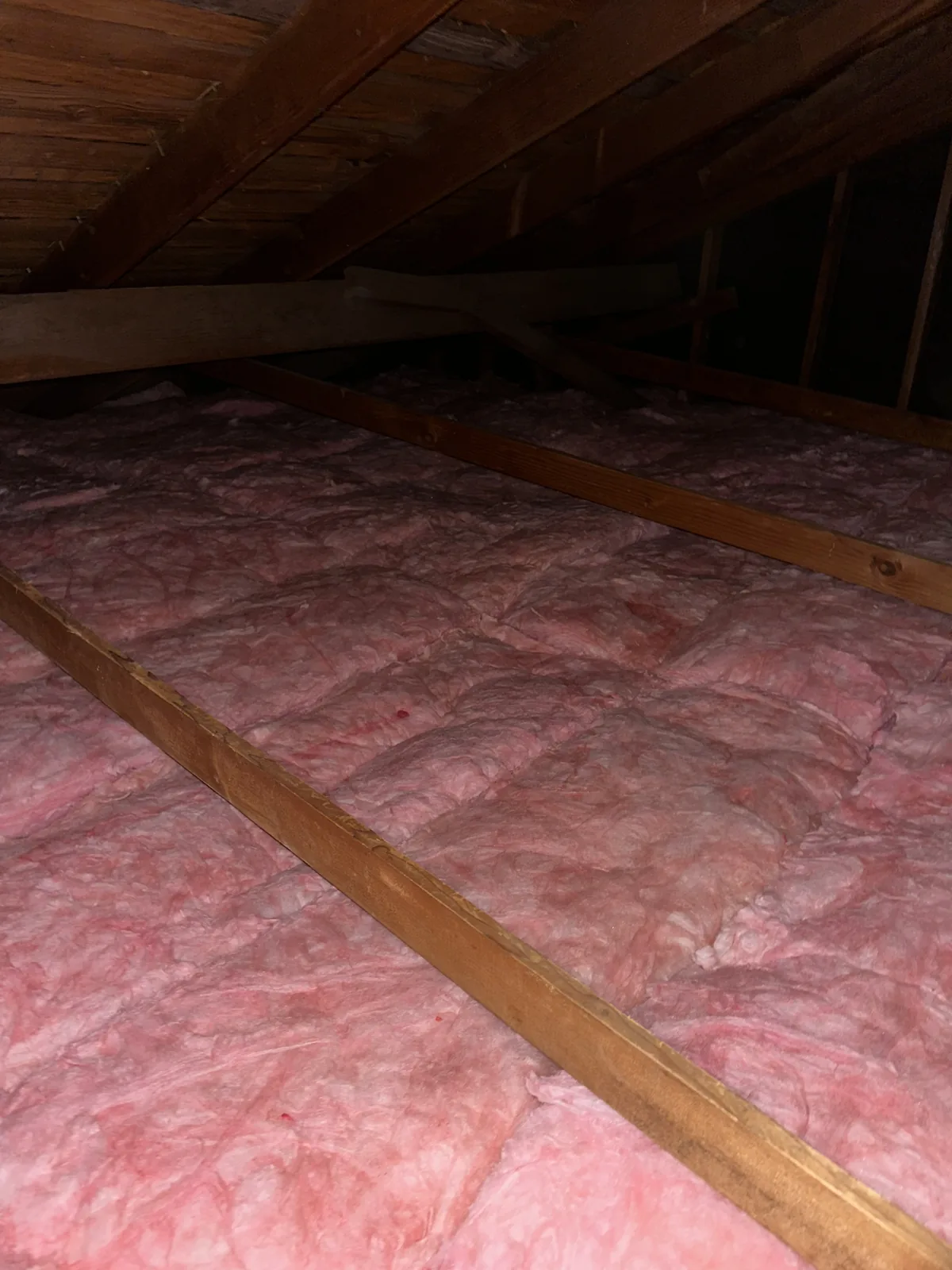
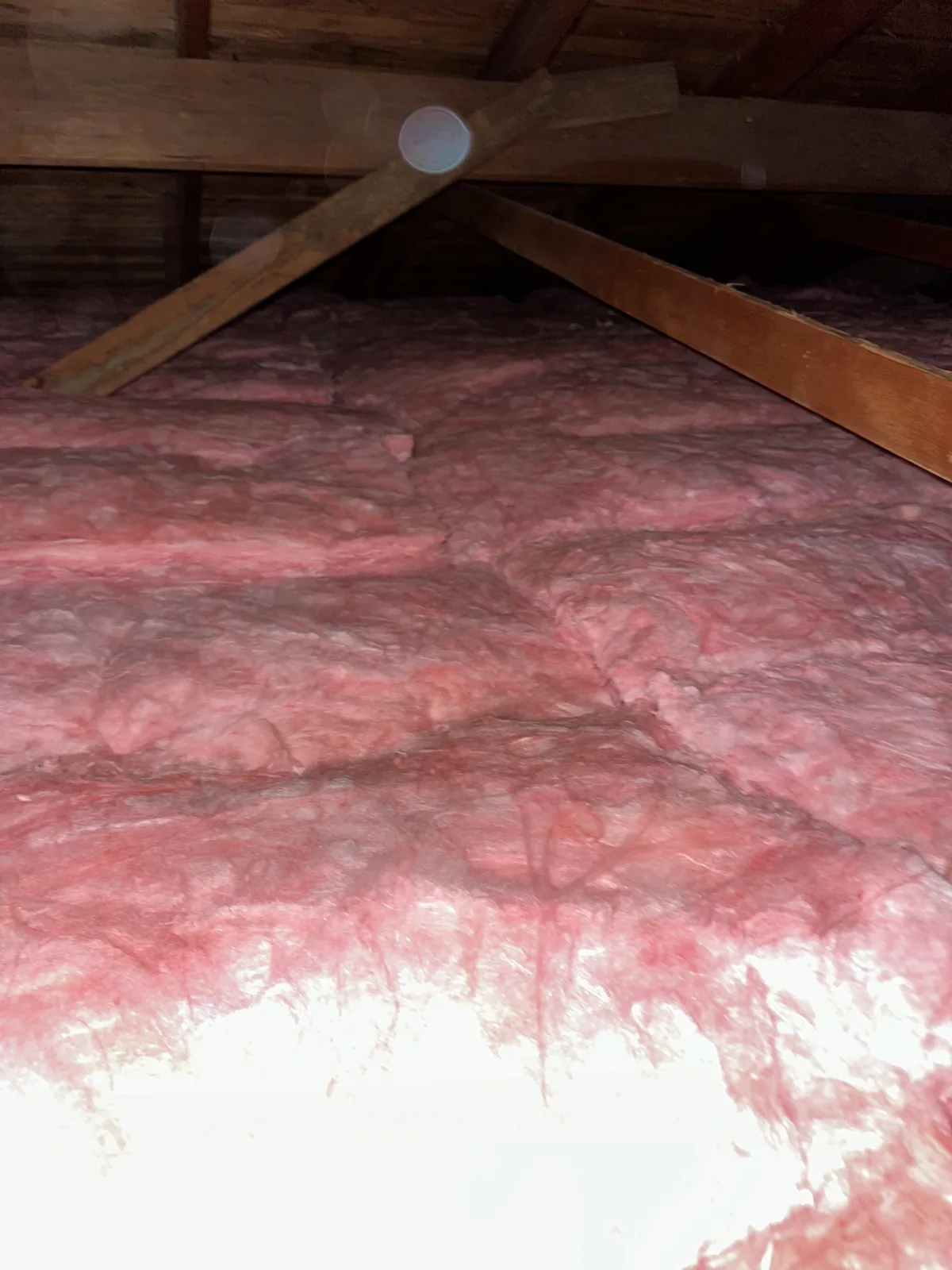
A 2x4 ceiling joist is only 3.5 inches deep and a 2x6 is 5.5 inches deep, while an R-38 batt may be around 12 inches thick — often much taller than the framing itself. With wires and ductwork stapled directly to the framing, the insulation has to be cut, split, compressed, or lifted up off the attic floor, and batts are very sensitive to every one of those interruptions.
 Split & fit,
not stuffed
Why Batts
What Fiberglass Batt Insulation Offers
Most Common Material
By far the most widely used attic insulation, especially in new construction — pre-cut to fit standard framing widths and proven over decades of use.
No Specialized Equipment
Batts can be installed without blowing machines, which is part of why they're so fast and cost-effective during framing and new construction.
Future Attic Access
Some homeowners choose batts because they can be easier to move around and access later for rewiring, duct replacement, re-pipes, or remodeling.
Workable for Future Trades
Compared to deep blown-in systems, batts can make it easier for contractors to navigate the attic during future low-voltage, security, or HVAC work.
Honest System Comparison
We explain the real trade-offs — a HERS rater told us testing showed blown-in can perform roughly 60 to 70% better than batts in actual attic conditions.
Installed the Right Way
Batts aren't supposed to have gaps, compression, voids, or air pockets. We split and fit carefully around the thousands of small interruptions in a real attic.
Our Process
How We Install Fiberglass Batts
A careful, detail-driven approach because the small things add up to real-world performance.
1
Assess the Attic
We evaluate your framing, wiring, ductwork, and obstacles to confirm whether batts are the right system for your home, budget, and long-term plans.
2
Split & Fit Around Obstacles
Instead of stuffing batts underneath wires and around ducts, we split and fit the insulation so it sits properly against the attic floor.
3
Eliminate Gaps & Compression
We address the thousands of small interruptions — electrical boxes, wiring, ductwork, framing transitions, and ceiling penetrations — that quietly lower installed R-value.
4
Verify the Installation
We make sure the batts deliver as close to their nominal R-value as a real attic allows, so you get the performance you paid for.
Ready for a more comfortable, efficient home?
Reviews
What Granada Hills Homeowners Say
★★★★★
"Luke at Hunter's Insulation was awesome! Super knowledgeable and easy to work with. He explained the best insulation options and helped me make the right choice for my home. Really appreciate the honest advice—highly recommend!"
M
Manuel LunaGoogle Review
★★★★★
"Luke was easy to work with and educated me as insulation was not something I had any knowledge of. In the end, I got exactly what I needed at a very fair price. Luke and his crew were very professional and did great work at my home."
B
Bridget HollandGoogle Review
★★★★★
"Luke and his team did a great job. They arrived on time, finished early and walked me thru the job when they were done. I highly recommend them for any insulation project. Don't be afraid to ask questions."
J
johnny patGoogle Review
Fiberglass Batt Installs — Real Job-Site Photos
Real job-site photos from our crews across the Granada Hills area.


FAQ
Fiberglass Batt Insulation FAQs
Are fiberglass batts a good choice for my attic?
They can be. Batts are the most common attic insulation material and a solid choice in many homes — especially when there's likely to be significant future work in the attic. Every attic is different, so we'll walk you through the trade-offs and recommend the system that makes the most sense for your house, budget, and long-term plans.
How do batts compare to blown-in insulation?
A HERS rater — a building energy-efficiency expert — told us university-level testing showed blown-in insulation can perform roughly 60 to 70% better than batts once installed in actual attic conditions. Blown-in usually wins on raw thermal performance, while batts can offer easier future attic access.
Does the R-value on the package match real performance?
Not always. The R-30 or R-38 printed on the packaging is the nominal R-value. Real installed performance can be significantly lower if the insulation is compressed, has gaps, or is poorly fitted — which is exactly why careful installation matters so much with batts.
What makes your batt installation different?
In a typical attic there can be thousands of small interruptions — electrical boxes, wiring, ductwork, framing transitions, and ceiling penetrations. Many companies simply stuff batts underneath wires or around obstacles. We split and fit the insulation properly because those small details add up to real-world performance.
Why do you sometimes recommend batts over blown-in?
We usually recommend batts when we know there's likely to be significant future work in the attic, like rewiring, duct replacement, re-pipes, or remodeling. Batts can provide a more workable attic environment for future trades compared to deep blown-in systems.
Can I get blown-in performance and still keep attic access?
Often, yes. Catwalks can be installed, access pathways planned strategically, and service areas designated ahead of time. That lets you get the performance benefits of blown-in insulation while keeping reasonable attic access for future work.
Get Your Free Estimate
Every home is different. Schedule a free, no-pressure evaluation and we will recommend what makes the most sense for your house, goals, and budget.
Get Your Free Estimateor call (818) 979-5857