
Attic fans and whole house fans are very similar products, but they serve two different purposes. When they’re installed together and designed correctly, they can dramatically improve comfort and reduce air conditioning usage.
What an Attic Fan Does
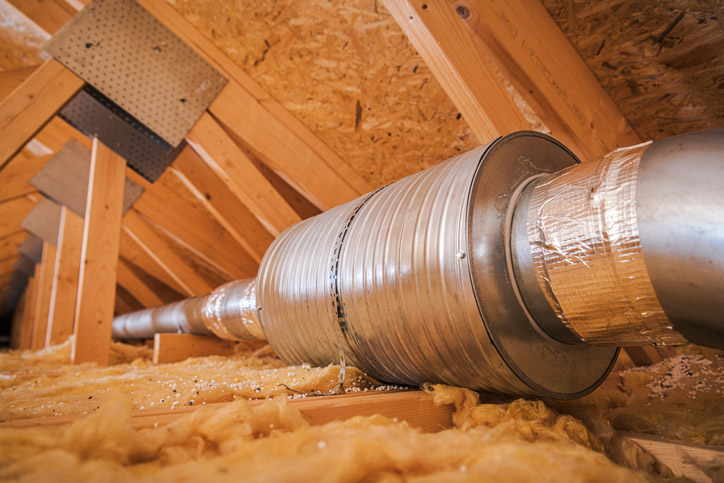
An attic fan is a ventilator mounted in the attic that operates on a thermostat. It does not run continuously. The fan turns on only when the attic reaches a set temperature and shuts off once that temperature is brought back down.
Its job is to reduce extreme attic heat during the hottest parts of the day.
On summer days—especially when outdoor temperatures reach 100 degrees or more—attic temperatures can exceed 160 degrees. With proper attic ventilation, an attic fan can help keep attic temperatures much closer to the outside temperature. In ideal conditions, attic temperatures can be reduced by up to 50 degrees. In real-world conditions, the goal is typically to keep the attic within about 5 degrees of the outdoor temperature.
That means on a 100-degree day, instead of a 160-degree attic, you might be closer to 105.
Attic ventilation is widely misunderstood. Roofing contractors, insulation contractors, and builders often get it wrong. But attic temperatures really do get that extreme, and it makes a major difference in HVAC efficiency, insulation performance, and overall comfort. Getting attic ventilation right is critical.
How Attic Heat Affects Your AC
On hot days, heat trapped in the attic causes the air conditioner to cycle on and off constantly. The AC ends up in a continuous battle with that heat.
Air conditioning systems operate at their lowest efficiency during short run cycles. Until an AC system runs for more than about 15 minutes, it’s operating inefficiently—similar to trying to drive on the freeway in first gear. Constant cycling not only wastes energy but can also cause the system to wear out faster.
The goal of an attic fan is to lower attic temperatures during the day so the AC isn’t fighting extreme heat from above.
It’s also important to note that attic fans only work properly when there is adequate intake ventilation. This is something that always needs to be evaluated. An attic fan is not always the right solution if the ventilation system isn’t designed correctly.
Thermal Mass and Why Homes Stay Hot
Air conditioning systems are designed to cool the ambient air inside the home, not the mass of the home itself. As soon as the AC shuts off, the structure of the house begins reheating the air.
Homes built before the mid-1970s often lack wall insulation. On hot days, especially on sun-exposed walls, you can physically feel heat radiating off the wall surface. That heat is stored in the structure and continues warming the living space.
Because of this slow heat release, homeowners can save up to 30% on AC usage by installing an attic fan. The attic fan handles the daytime heat load—but nighttime is where the next system comes in.
What a Whole House Fan Does
Whole house fans are designed to cool and ventilate both the home and the attic whenever the outdoor temperature is cooler than inside. This typically happens from early evening through early morning.
By opening windows and running a whole house fan, you can cool the thermal mass of the home itself. That means the next day, the house starts cooler and doesn’t heat up as quickly.
A good real-world example of this principle is a car sitting in a parking lot on a hot day. Turning on the AC alone will cool it eventually, but opening the windows and driving allows heat to escape much faster—even if the outside air is still warm. Whole house fans use that same thermal mass cooling principle.
They’re also effective for indoor air quality. Cooking smells, stale air, and musty odors can be cleared out quickly by creating a strong cross-breeze through the house.
Without a whole house fan, homes often retain all the heat they built up during the day, causing the AC to cycle all night long. By cooling the thermal mass, whole house fans can reduce AC usage by 50–90%. The airflow itself can also make occupants feel up to 10 degrees cooler almost instantly.
Why Attic Fans and Whole House Fans Work Best Together
Both systems are effective on their own, but the benefits increase significantly when they’re installed together.
The attic fan manages heat during the hottest part of the day by keeping attic temperatures lower. The whole house fan takes over in the evening and early morning by flushing heat out of the home and cooling the structure itself.
Together, they create a home that stays cooler around the clock while reducing strain on the air conditioning system.
Quiet Design Matters
Modern whole house fans use smart design to stay quiet. The motor is typically suspended with webbing straps instead of being mounted directly to framing, which minimizes vibration. Combined with efficient brushless motors, these fans move large volumes of air while remaining surprisingly quiet.
The End Result
When attic fans and whole house fans are designed and installed correctly, they work together to create a home that stays cooler, more comfortable, and more energy-efficient. In homes where both systems are used properly, we’ve seen AC usage reduced by as much as 90%.